by Aaira Gupta
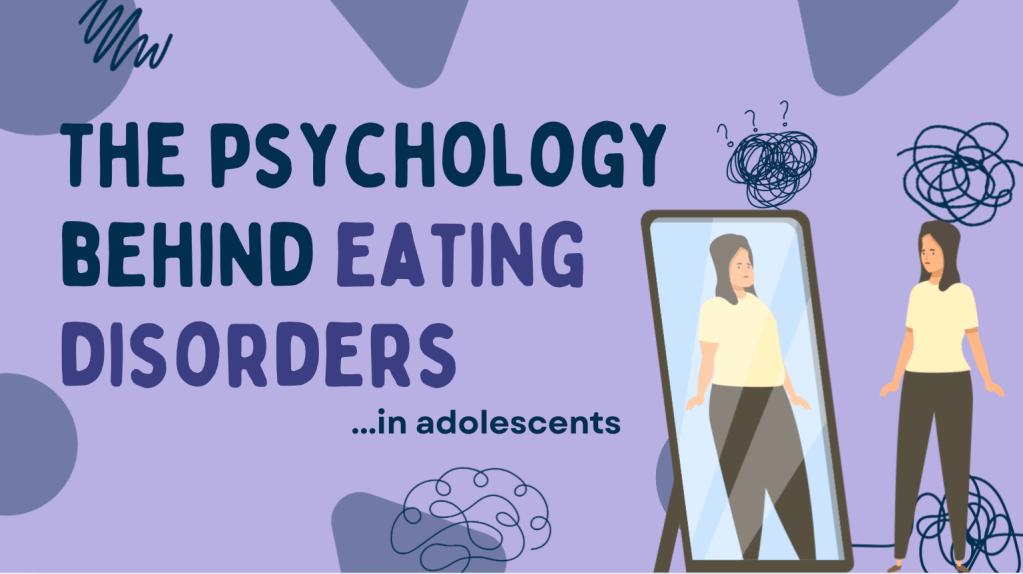
Do you or someone you know have a complicated relationship with food? With the emergence of social media, unrealistic body standards and eating habits have contributed to the rise of insecurity and anxiety.
Many people assume that eating disorders only affect wealthy, white females who want to be skinny. However, this sterotype is misleading. Eating disorders can affect anyone, regardless of age, gender, race, religion, or socioeconomic status.
It is important to challenge these stereotypes because they can prevent people from recognizing the signs of an eating disorder in themselves or others. They may also feel that their struggles are not valid or get overlooked by others because of their background. Recognizing it can affect anyone ensures that more people receive the support they need.
Another common misconception a lot of people have about eating disorders is that they are just about food. This could not be further from the truth; In actuality, it is a complex mental health condition that enables people to act in ways to cope with a low self esteem, psychological distress, or a lack of control.
Although eating disorders can develop at any age, adolescence is a paticularly vulnerable stage of life. In the following sections, I’ll explore the psychology behind why teens are at a greater risk as well as how various factors contribute to the development of eating disorders.
Common Myths About Eating Disorders
Myth #1: Eating disorders only affect girls.
Fact: Eating disorders can affect people of any gender. Although they are more commonly diagonosed in females, males also experience them and may be less likely to seek help because of stigma.
Myth #2: You have to be underweight to have an eating disorder.
Fact: A person’s weight does not determine whether they have an eating disorder. Many can appear to be at an average or higher weight while still experienceing severe physical/psychological consequences.
Myth #3: Eating disorders are only about wanting to be skinny.
Fact: While that can be the case for some, eating disorders often involve issues such as anxiety, perfectionism, low self-esteem, or a desire to regain a sense of control.
Myth #4: Eating disorders are a choice.
Fact: No one chooses to develop an eating disorder. Like other mental illnesses, eating disorders result from a combination of factors and require professional treatment.
What are Eating Disorders?
Eating disorders can look different for everyone. They are a serious mental health condition that affect a person’s relationship with food, body image, and eating behaviors.

The most common ones include
–Binge eating disorder: It involves regularly eating a lot of food over a short period of time until you’re uncomfortably full.
–Bulimia nervosa: Cycles of binge eating followed by behaviors “to make up for it” such as vomiting, fasting, misusing laxatives, etc.
–Anorexia nervosa: Severly restricting food to the point of losing a dangerous amount of weight. An intense fear of gaining weight or a distorted view of their body.
–Avoidant Restrictive Food Intake Disorder (ARFID): When someone avoids/restricts food so much that it affects their nutrition, weight, growth, heath etc. May be caused by extreme sensitive to texture, smell, taste. Lack of interest in eating, and more.
–Other Specified Feeding or Eating Disorder (OSFED): A broader category for serious eating disorder symptoms that do not fit exactly into another diagnosis.
Anorexia nervosa has one of the highest mortality rates of any psychiatric behavior, due to severe starvation and medical complications. These serious consequences highlight the importance of early recognition and treatment. To understand why eating disorders often begin during adolescence, it is essential to examine the psychological changes that teenagers experience during this stage of life.
Why Adolescents Are Especially Vulnerable
According to the National Library of Medicine, approximately 13% of adolescents develop an eating disorder by age 20. Why is this the case?
During this stage of life, many teenagers are trying to figure out who they are while dealing with social pressures, academic stress, social media, and more at the same time.
Additionally, since the adolescent brain is still developing, it makes teens more susceptible to peer influence, perfectionism, and anxiety. It is also the first time that they become aware of how others see them. This can make comments about appearance feel much bigger than what they are.
Puberty can also increase body dissatisfaction because adolescents are experiencing rapid changes in their weight, body shape, hormones, and appearance. These changes may feel uncomfortable or out of their control which results in disordered eating behaviors.
Adults may not be as vulnerable since their brains are fully developed, they have established personal identities, and have a greater independence from peer pressure. They also may be less deeply impacted by unrealistic body standards on social media.
The Role of Social Media and Body Standards

Social media plays a huge role in how adolescents view their bodies. Unknowingly, many teens are exposed to edited images online which results in them to comparing themselves to people who don’t even look that way in real life.
It is hard to feel confident in your own body when your feed is constantly showing you what you’re “supposed” to look like.
One psychological concept that explains this is the social comparison theory. It suggests that we determine our personal/social worth by measuring our abilities and traits against others. Because of social media, these comparisons are often unrealistic because users typically share only carefully selected and edited versions of their lives.
Another important factor to consider is body dissatisfaction. Repeated exposure to idealized body types can lead to teenagers becoming increasingly critical of their own appearance.
Over time this dissatisfaction may increase feelings of anxiety or shame. For some, these emotions can contribute to unhealthy behaviors such as emotional eating or purging in an attempt to change their bodies.
Social media platforms also reinforce these behaviors through likes and follower counts. This positive feedback on apperance can create a sense of reward, encouraging users to continue pursuing unrealistic beauty standards.
Online, “Forgetting to eat” or “Fasting” are behaviors that can be praised or admired. This encourgement can be harmful for teenagers to see because it creates the belief that these behaviors are normal and something to look up to.
Recieving little engagement or comparing themeselves to others may increase feelings of rejection or self-worth. This cycle of comparison and validation can make apperance seem more important than health or well-being.
Although social media in it of itself does not cause eating disorders, it can increase the likelihood of one developing by contributing to various risk factors (anxiety, peer pressure, perfectionism).
Warning Signs to Look Out For & How To Help

Eating disorders don’t just happen overnight. It starts with subtle changes in behavior that become more serious overtime.
Here is a list of warning signs to look out for if you suspect someone you know may have an eating disorder.
- Skipping meals regularly
- Frequently weighing themselves
- Feeling guilty after eating
- Constant negative comments about their body
- Avoiding eating with friends/family
- Becoming obsessed with calories or “eating healthy”
While these aren’t all the warning signs, they are the most common ones to look out for.It is also important to remember that not everyone with an eating disorder appears underweight. You can still maintain a normal weight while participating in unhealthy eating behaviors.
If someone you know is struggling, your support can make a huge difference. Avoid sounding judgemental or commenting on their apperance. This can actually make matters worse and make them not want to talk to you.
Instead, saying something such as “I’m here if you want to talk” can be much more supportive. This allows the individual to not feel as trapped. Recovery is more likely when people feel supportive rather than judged.
Treatment and Recovery
As mentioned previously, the earlier treatment begins, the greater the chance of preventing long-term physical and psychological complications.
The most common forms of treatment is psychotherapy (talk therapy). Cognitive Behavioral Therapy (CBT) helps teens recognize and change unhealthy thoughts/behaviors surrounding food and body image.
For teenagers, Family-Based Therapy (FBT) is also effective because it involves parents supporting healthy eating habits and recovery.
It is important to remember that reovery is a gradual process that rarely goes in a straight line. It’s normal to experience setbacks, and this does not mean treatment has failed. With continued support from healthcare professionals, family, and friends, many adolescents recover and go on to live healthy lives.
Conclusion
Eating disorders are much more than concerns about food or apperarance. They are complex mental health conditions shaped by various factors. Adolescence is a particularly vulnerable period because teenagers are in the process of developing their identities while navigating peer pressure, social media, and academic stress.
By understanding the warning signs and challenging harmful stereotypes, we can help reduce stigma and ensure that more teenagers recieve the support they need.
If you want to learn more about disordered eating behaviors in teenagers, check out my Spotify! My newest episode includes an interview with Holly Spinner, a clinical psychology PhD student at FSU, about her work with emotional eating among teenagers.
Don’t be afraid to leave a comment or give kudos! What should my next blog post be about?
Sources
Balasundaram, Palanikumar, and Prathipa Santhanam. “Eating Disorders.” StatPearls Publishing, 2023.
“Disordered Eating: Psychological Health & Stress Reduction: Health Answers: Student Health Center: Indiana University Bloomington.”
Mayo Clinic. “Eating Disorders.” Mayo Foundation for Medical Education and Research, 28 Mar. 2023.
Suarez-Albor, Candy Laurine, et al. “Factors Associated with Eating Disorders in Adolescents: A Systematic Review.” Acta Biomedica Atenei Parmensis, vol. 93, no. 3, 1 July 2022, pp. e2022253–e2022253, https://mattioli1885journals.com/index.php/actabiomedica/article/view/13140/10833, 10.23750/abm.v93i3.13140. Accessed 23 July 2026.
“The Psychology Behind Eating Disorders.” 2025.
Williamson, Donald A., et al. “Psychological Aspects of Eating Disorders.” Best Practice & Research Clinical Gastroenterology, vol. 18, no. 6, Dec. 2004, pp. 1073–1088, 10.1016/j.bpg.2004.06.023.


Leave a Reply