By Aaira Gupta

If you have ever listened to a song that perfectly captured your feelings into words or sent a surge of emotion rushing through you, you know why music can feel so addictive.
In this generation teenagers are more attached to music than ever before. Their playlists create an emotional outlet for self-expression and contributes to identity formation.
It produces a space of belonging and understanding that is essential in a world of high social media use and constant exposure to negative news.
There’s no question about the importance and role music plays in our everyday lives. It influences our emotions and cognitive processes and serves as a powerful tool for social connection and cultural expression.
It positively impacts our mood, memory, and creativity; It is also proven to have healing and therapeutic benefits as well.
Scientists have discovered that the impact music has isn’t just emotional but biological as well. It’s effect on the brain triggers the release of the feel-good hormone dopamine and reward system. The activation of the limbic system is what causes our physical responses such as chills or tears.
But how does music have such a hold on our emotions and why is it able to calm us down or energize us within minutes?
In this blog post I will be breaking down the psychology and science behind music and the specific effects it has on adolescents.
Why Music Feels so powerful During Teen Years
Music is especially influential during the teenage years because the brain is undergoing intense development.
This contributes to the creation of deep and emotional memories of songs that become intertwined with identity, social connections, and significant life events such as first loves and heartbreaks.
Certain songs will always have a special place in your heart because of the memories you associate it with.
For instance, research suggests that music activates the brain’s emotional and memory centers (why we associate songs with important life events).
This connects to a neurobiological process called the reminiscence bump. This is the tendency for adults (particularly those over 40) to recall a disproportionately higher number of personal memories from their youth and early adulthood.
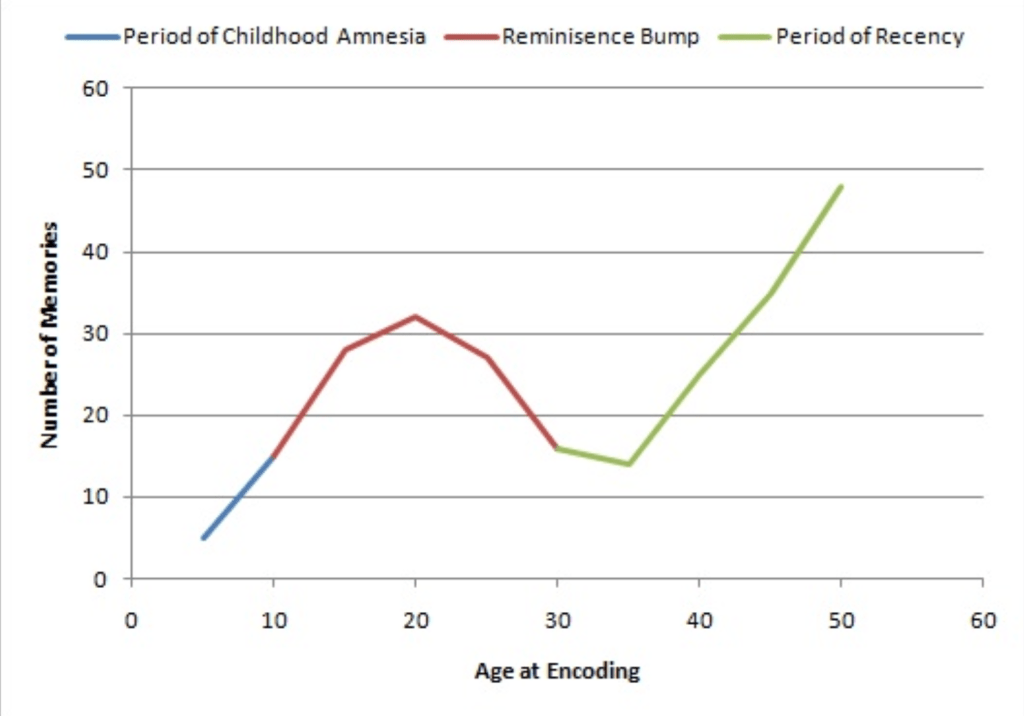
Since important life events occur during adolescence, the songs associated with these experiences are more significant to us than the new songs we hear on the radio.
Another thing to note is that music plays a large role in social identity. For instance, its a means of self expression, belonging, and facilitating connection with like-minded peers.
Identity refers to our sense of who we are as individuals and as members of social groups. In adolescence, the way we see ourselves changes in response to our peers, family, school, and other social environments.
Identity formation in teens is especially crucial because without a sure sense of self teens may have a lower self-esteem, anxiety, depression, and isolation.
As a result, they may have more difficulty maintaining stable relationships and being successful in adulthood.
Music combats identity confusion by allowing teenagers to differentiate themselves from others by aligning with specific musical genres and subcultures.
Sharing playlists, Instagram notes, and attending concerts also strengthens social bonds by creating a shared experience that reinforces identity and provides a sense of community in this crucial period.
Nothing bonds people faster than screaming the wrong lyrics of a song together at full volume!
Additionally, teens experience greater levels of dopamine (the “feel-good” hormone) release from music compared to adults.
This is because adolescent brains are more sensitive to the chemical, which contributes to stronger and more emotional connections to songs during this period.
This dopamine release contributes to feeling of pleasure, arousal, and motivation. The anticipation of a catchy chorus or emotional peak in a song can also trigger dopamine release. This is because the brain is rewarded for knowing what’s coming up.
The Neuroscience of Music

Why is it that certain songs have the power to make us feel a certain way?
There is a principle to music called entrainment. This is the process of synchronization where one rhythmic system (like the beat of music) influences another system to align its tempo or rhythm.
Our brains are constantly oscillating at different wavelengths and frequencies throughout the day. What’s cool is that they actually sync up with the frequencies in your external environment.
This leads to coordinated behaviors such as foot-tapping, dancing, or even changes in heart rate.
We can entrain our brains with music to put us in the state of mind we desire to be in. For instance, relaxing music has been shown to decrease anxiety and frequency music associated with the gamma brainwave state can help shift you into a state of focus.
This is why being selective and intentional about the type of music you listen to matters; If you are constantly listening to music with low vibrations (darker or more intense tones) it can influence your mood and emotional state over time.
This is especially critical in teenagers whose brains are still developing and are more sensitive to emotional and environmental influences like music.
This sensitivity can be traced back to what’s happening inside the brain itself.
Music activates several structures in the brain within the limbic system, like the amygdala, hippocampus, and banal ganglia, which are crucial for emotions and memory.
This network works together to process the complex sounds we hear throughout a song. The brain’s prediction abilities and reward system contributes to the musical pleasure and emotional responses we have.
Let me break down how each part of the brain is related to music.
The Auditory Cortex
The auditory cortex is crucial for processing the fundamental elements of music, such as pitch, rhythm, and harmony. It does this by analyzing raw sound data and sending it to other brain regions.
Essentially its like the music processor of your brain; It turns sound waves into information and then shares that information with other brain parts that add emotion, memory, and action.
Listening to music works out the whole brain! This may be why it’s so addictive.
Hippocampus
The hippocampus is a seahorse-shaped structure located in the medial temporal lobe of the brain. It plays a crucial role in memory consolidation (helps form, organize, and retrieve memories).
Music and the hippocampus are strongly linked; This part of the brain is the reason why a song can be so strongly tied to a moment in your life.
Amygdala
A key part of the limbic system that is primarily responsible for processing emotions. When you listen to music, it enables you to perceive and enjoy its various elements.
It’s what give song’s their emotional punch. A single cord can make you calm, hyped, or even tear up.
Motor Areas
These areas are involved in processing rhythm, planning and sequencing movements, and coordinating motor control. This explains why your foot taps without permission or why you feel motivated to dance.
Ever get chills from a song? That feeling is called frisson. This occurs when your reward system is flooded with dopamine at just the right moment; like when a chorus drops or a beat hits perfectly.
The Potential Downsides
Despite its many benefits, music can also have negative effects on emotional well-being, focus, and even physical health when not used mindfully.
For example, always listening to sad or emotionally heavy music can reinforce negative emotions like sadness or loneliness.
On another note, using music as your only coping mechanism can make it harder to regulate emotions in other ways. Many teenagers use music to avoid dealing with their emotions, which can build emotional avoidance over time.
Listening to music can even cause sleep disruption; upbeat or stimulating music before bed can interfere with your sleep cycle and make it harder to get deep sleep.
Conclusion

Music isn’t just background noise. It is a powerful force that shapes how we think, feel, and even remember the world around us. Every song that we play interacts with our brain in ways we often don’t realize.
For teenagers, this impact is even more intense. Our brains are still wiring and developing, making us more susceptible to emotional cues in our favorite songs.
Music is a tool and the way we use it determines its power. So next time you put in your earbuds to listen to your favorite playlist, remember: you’re impacting your brain. Choose what you feed it wisely.
Sources
“Adolescent Identity Development.” Adolescent Identity Development – ACT for Youth, actforyouth.org/adolescence/identity.cfm. Accessed 18 Oct. 2025.
Chen, Li. “Influence of Music on the Hearing and Mental Health of Adolescents and Countermeasures.” Frontiers in Neuroscience, U.S. National Library of Medicine, 3 Aug. 2023, pmc.ncbi.nlm.nih.gov/articles/PMC10434992/%C2%A0.
Sherman, Larry. “How Your Brain Benefits from Music, with Larry Sherman (Ep. 115).” YouTube, YouTube, www.youtube.com/watch?v=9opxxqwztRc&t=422s. Accessed 18 Oct. 2025.
Trimble, Michael, and Dale Hesdorffer. “Music and the Brain: The Neuroscience of Music and Musical Appreciation.” BJPsych International, U.S. National Library of Medicine, 1 May 2017, pmc.ncbi.nlm.nih.gov/articles/PMC5618809/%C2%A0.
 The Mind Unfiltered
Leave a comment